


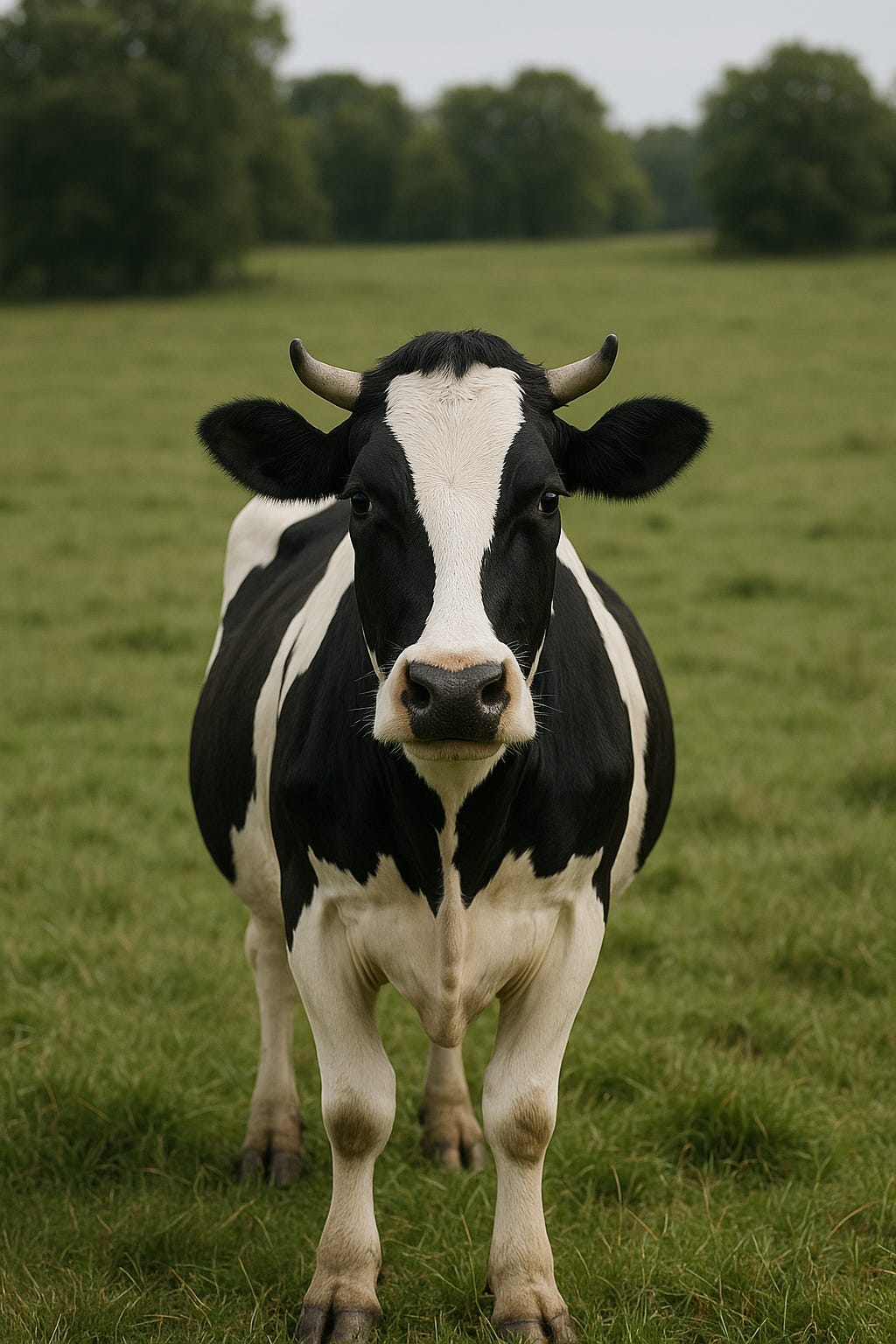
Methane Madness and the Tractor Revolt
A Pre-Index Revolt the World Press Hasn’t Indexed Yet
By Jim Reynolds | www.reynolds.com
Britain’s farmers aren’t “protesting.” They’re warning the country where reality still lives.
Britain is flirting with the same nightmare again: a governing class making “solutions” in a sealed room, then acting surprised when the people who actually build, grow, fix, and feed things begin to revolt.
This time the revolt shows up on four wheels.
Tractors in London. “No Farmers, No Food.” “No Farmers, No Christmas.” Video clips racing ahead of the legacy press. Police bans, reroutes, arrests, and a lot of rural people who don’t look like they’re going home to quietly fill out a compliance form.
The deeper story isn’t the convoy. The deeper story is the collision between two worlds: the world of paperwork and the world of food.
Most protests are expressive. They’re theater. They’re social media cosplay. They last a weekend and dissolve into hashtags.
Farm protests are different because farms are different. A farm is not an Instagram identity. It’s land, debt, equipment, margins, weather, and inheritance.
So when policy threatens the ability to pass a farm to the next generation—through inheritance rules, tax changes, regulatory burdens—the farmer doesn’t hear “fairness” or “modernization.” He hears: your family line ends here.
Here’s the tell that the entire system is drifting into unreality: it keeps coming back to cows.
Cow methane. Cow burps. Cow farts. This is where modern governance ends up: the people who can’t run a hardware store confidently dictating livestock policy to the people who can feed a nation.
The absurdity matters because it reveals the method: take a complex, uncertain, contested system, reduce it to a cartoon villain, then use the cartoon to justify sweeping controls that reshape society permanently.
Across the West, the climate doomsday crowd has made too many hard predictions that didn’t land. Deadlines passed. Certainty softened. Language got quietly revised.
Meanwhile, the policies stayed. In fact, they hardened.
That gap—between revised confidence and unrevised policy—is where resentment grows.
Add the grievance nobody in polite rooms wants to touch: immigration.
Many farmers believe they’re being taxed harder and regulated tighter to fund a system that rewards non‑contribution while punishing contribution. Whether every detail is fair is less important than the lived perception of injustice.
The farmer sees moral language aimed outward and punitive language aimed inward. That asymmetry is enraging.
This is why the unrest doesn’t dissipate. Farmers sit at the front end of the supply chain. They don’t need mass numbers. They have leverage.
The legacy press lags because this story is rural, producer‑led, and politically inconvenient. Reality appears first on X as fragments—videos, arrests, convoys—before it hardens into official narrative.
Britain now stands at an old European fork: technocracy versus production. Targets versus survival.
If policy depends on regulating cow burps while importing new mouths and taxing farmers out of existence, the system will eventually eat itself.
The tractors aren’t theater. They’re a warning.
And that warning isn’t addressed only to Whitehall.
America is running the same experiment—different accent, same logic: punish producers, moralize bureaucracy, and treat borders as optional while pretending the bill never comes due. We can argue about methane models all day. But we cannot pretend that millions of unregulated arrivals don’t impose real costs—on housing, schools, hospitals, policing, wages, and civic trust—costs that land hardest on the people who didn’t design the policy.
So yes: London may be a preview.
The question is whether we learn from it early—or wait until our own tractors roll, our own supply chains tighten, and our own leaders discover, too late, that reality does not negotiate with slogans.
What do we do now—while we still have choices?
Nice summary of the situation. The tractor revolt started in the Netherlands, maybe before, with their own tractor revolt. How did that workout? The US tractors and farming acreage are quantum much larger. Woe be to us if the Democrats again take the levers of power.
Unfortunately life is filled with contradictions. Gasoline, the fundamental backbone of our nation's economy has been roundly condemned as the disease of our nation sure to kill our future...unless we converted to re-cyclable alternatives. Except those alternatives turned out to be less reliable or efficient as advertised. The key word here is "advertised" because for the last 100 years or so the nation has been spoon fed advertising as disclosing reality and truth. Time and reality have interrupted this nonsense but past reality is easily ignored when new definitions of reality are presented. No, we don't learn. We take information that is shallow and meritless and condemn those who seek to show true reality. Is that's not really redundant.