

The Bear Hug That Broke the Ambush
By Jim Reynolds | www.reynolds.com
April 14, 2026
Note: This account is based on an April 14, 2026 interview with Sam Reineberg on The Shawn Ryan Show, recounting the events of March 12, 2026, on the Old Dominion University campus.
On Memorial Day, 2026, this is dedicated to the memory of Lieutenant Colonel Brandon Shaw, whose brave actions stopped a massacre — and cost him his life.
⸻
Sometimes the fate of a room turns on a decision so fast that no one inside it has time to name it. Later, people will reconstruct timelines, statements, and official language. But in the moment, it is simpler than that.
A man with a gun opens fire.
Another man moves toward him.
That is the hinge.
In Sam Reineberg’s account of the attack at Old Dominion University, that man was Lieutenant Colonel Brandon Shaw. Reineberg’s retelling strips away abstraction. What remains is raw courage, raw grief, and one decisive act that changed everything in the room.
⸻
Reineberg is compelling precisely because he is not trying to be. He sounds like someone still carrying the shock, still sorting memory from noise. Early in the interview he says that when he stays busy, he does better—but when he is not busy, “my mind gets busy.”
That line tells you everything.
The event is over. The mind is not.
⸻
The cadets were unquestionably heroic.
When the attacker entered the ROTC classroom, he asked if it was ROTC. When someone confirmed it, he shouted “Allahu Akbar” and opened fire almost immediately.
The cadets did not freeze.
Some had pocket knives. Reineberg had no weapon at all. They closed distance, wrestled for control of the gun, pinned the slide, forced the muzzle away, and ended the threat in minutes. Then they shifted immediately to lifesaving efforts.
That kind of action saves lives.
But it only became possible because of what happened first.
⸻
Colonel Shaw was closest to the shooter when the attack began—just a few feet away. No warning. No time.
When the gunfire started, he moved forward.
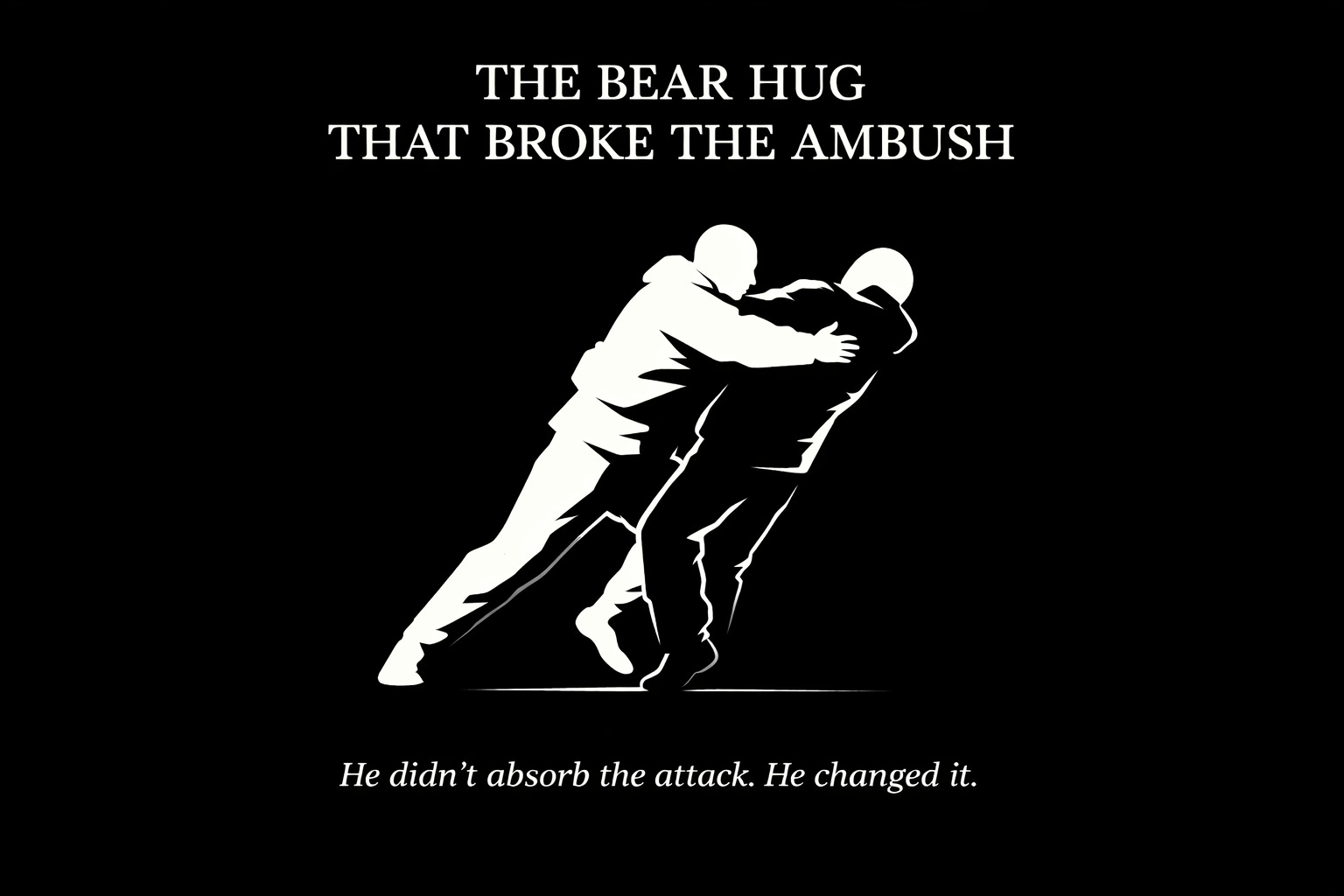
He bear-hugged the shooter to the ground—even after being hit.
He wasn’t just a victim.
He interrupted the attack with his body.
That single act broke the rhythm of the ambush. It turned an upright shooter into a man in a struggle. It created the opening the cadets needed to reach him and stop it.
Shaw didn’t absorb the attack.
He changed it.
⸻
Reineberg’s emotions settle there—not on the attacker, but on Shaw.
When he speaks about the killing of the terrorist, he is almost detached. What stays with him is trying to save Shaw.
The memories are specific:
The blood.
The belt used as a tourniquet.
The effort to keep him conscious.
The inhaler.
The belief—maybe still—that he could be saved.
Reineberg worked on him, carried him, fought for him.
And lost him.
⸻
That is what gives the account its weight.
This is not a clean heroic narrative where the good men act and everything resolves. It is something harder:
They acted.
They stopped the threat.
And still could not save the man who made it possible.
That is why the medal ceremony felt hollow to him. That is why Shaw’s family thanking him was unbearable. That is why his response was not pride—but apology.
Public language calls this heroism. It is.
Private experience calls it something else.
I tried.
Why wasn’t it enough.
⸻
There is no self-dramatizing in him. That stands out.
He redirects praise to the group. He insists on “we.” Even when pushed, he widens the frame—to the other cadets, and especially to Shaw.
That restraint makes the account more credible, not less.
⸻
The aftermath deepens the picture.
Hours at a police station, still covered in blood.
A lost phone. Borrowed devices just to call home.
Sitting in shock while being offered soda and candy.
A scream in a hospital triggering a physical reaction.
Little sleep. No appetite. Replaying the moment.
This wasn’t just an event.
It followed him out of the room.
⸻
And yet the most powerful moment is the simplest.
Reineberg says he misses Colonel Shaw. He says he hopes Shaw knows they did their best.
That lands because it is so direct.
Beneath everything else is the oldest human plea:
I didn’t leave you.
I tried.
⸻
There is something deeply American in this story.
Not the bureaucratic version. Not the managed version.
The real one.
A man moves toward danger. Others follow. A group refuses to let evil operate uncontested.
A terrorist entered expecting victims.
He met resistance.
⸻
If one sentence carries the weight of what happened, it is this:
Lieutenant Colonel Brandon Shaw, hit at near point-blank range, moved toward the gunfire, bear-hugged the shooter, and created the opening that allowed his cadets to stop a massacre.
The cadets were heroes for what they did next.
Shaw was the reason there was a next at all.
⸻
Sometimes a life is given not in theory, not in slogan—but in one forward motion.
That was the moment.
That was the difference.
That is the story.
[pause]
————————
Post Note
The attacker was Mohamed Bailor Jalloh, 36, a naturalized U.S. citizen originally from Sierra Leone. A former Virginia Army National Guard member, he pleaded guilty in 2016 to attempting to provide material support to ISIS (then called ISIL). Court records show he had listened to Anwar al-Awlaki lectures, expressed interest in a domestic attack similar to Fort Hood, and tried to acquire weapons. Sentenced to 11 years, he was released early from federal prison in December 2024 after completing a drug treatment program and was on supervised release at the time of the attack. He purchased the .22-caliber handgun used in the shooting the day before.
The FBI is investigating the incident as an act of terrorism.
Thank you reminding us of Shaw’s tragic sacrifice and the bravery of his fine cadets. The footnote also reminds us that not all who enter our country value the many gifts that our country offers. 😢
Thank you for this report.