


The Capture of Maduro: A Defining Moment in U.S.–Latin American Relations
by Jim Reynolds | www.reynolds.com
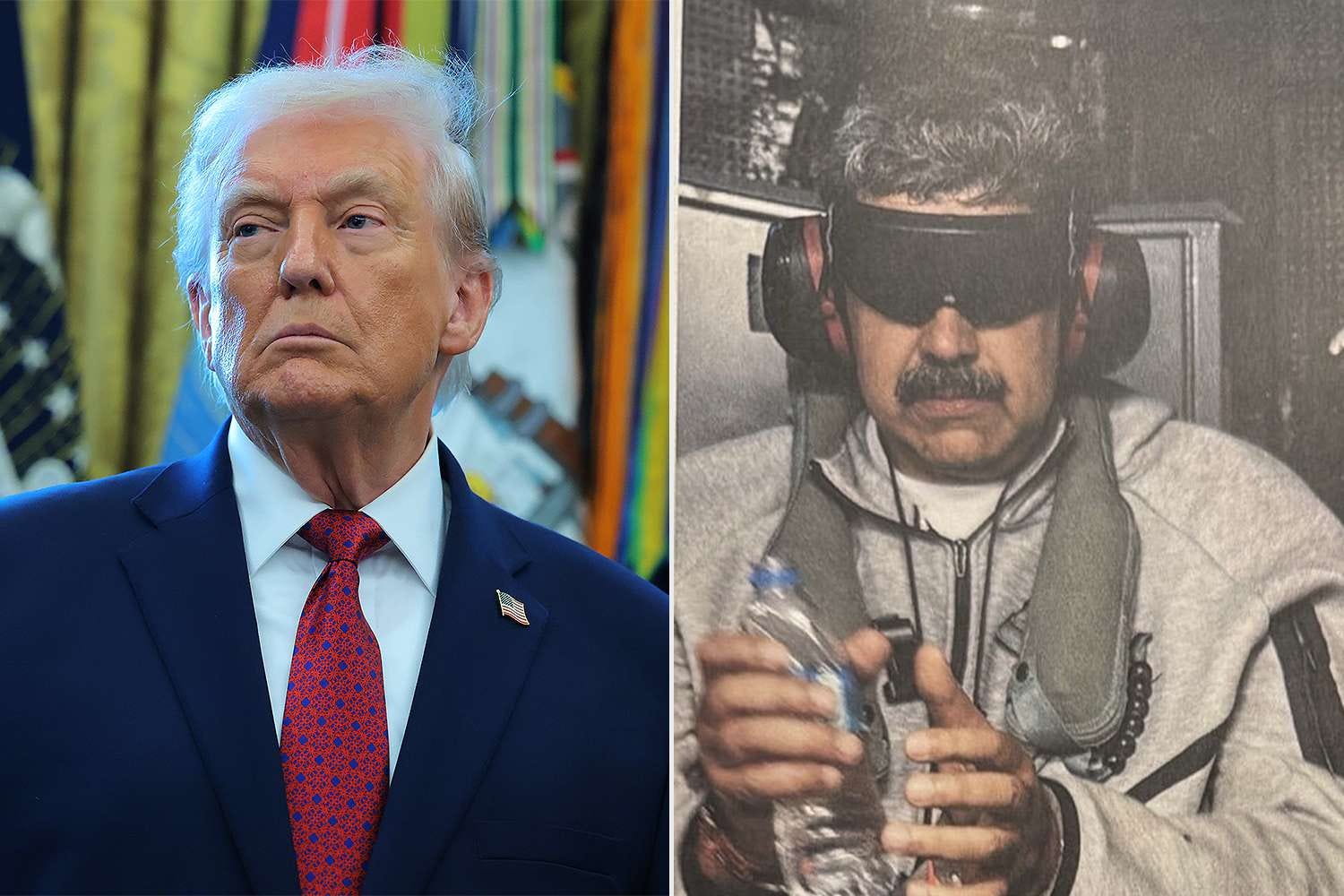
At dawn on January 3, 2026, the United States executed one of the most consequential military operations in the Western Hemisphere in decades. President Donald Trump announced that U.S. forces had captured Venezuelan strongman Nicolás Maduro and his wife, Cilia Flores, during a precision nighttime operation in and around Caracas. The pair was extracted from the Tiuna military complex and flown to the United States to face long-standing federal charges tied to narco-terrorism and cartel coordination.
According to U.S. officials, the operation followed months of intelligence collection tracking Maduro’s movements, habits, and security routines. The strike was deliberately narrow: no prolonged ground engagement, no occupation force, and no reported U.S. casualties. Temporary power disruptions occurred in parts of Caracas, but the regime’s core command structure was not leveled indiscriminately. This was a capture mission, not a bombing campaign.
Trump later stated that the United States would temporarily oversee a transition framework, aimed at stabilizing the country, preventing internal collapse, and restoring Venezuela’s oil infrastructure with the participation of American firms. Given Venezuela’s vast reserves and years of deliberate mismanagement, energy restoration is not a side issue—it is the economic keystone of any viable post-Maduro outcome.
This was not an impulsive action. It reflects a return to a hard-edged Monroe Doctrine logic: instability in the Western Hemisphere does not stay local. Venezuela under Maduro had become a regional exporter of disorder—drugs, migration pressure, criminal networks, and foreign influence. The regime’s deep ties to cartels, its role in facilitating transnational trafficking, and its alignment with hostile external powers placed it well outside the category of a normal sovereign government.
From a strategic standpoint, the operation addressed several long-standing U.S. interests simultaneously:
• Disrupting narco-terror networks tied directly to U.S. domestic harm
• Cutting off Russian, Chinese, and Cuban leverage in the Caribbean basin
• Reducing mass migration pressure driven by a deliberately failed state
• Reopening a major energy producer to lawful global markets
In short, it treated Venezuela not as a diplomatic abstraction, but as a security problem that had metastasized.
Domestically, the reaction among conservatives has been straightforward: this is what deterrence looks like when it is actually enforced. No endless debate. No symbolic sanctions. No multilateral paralysis. A hostile regime leader, already indicted, was removed from the board with speed and clarity. The message—to Caracas, Havana, Tehran, and beyond—was unambiguous.
Critics predictably object to questions of authorization and precedent, but those objections miss the practical reality: precedent already existed. The United States had formally charged Maduro as a narco-terrorist years ago and placed a multimillion-dollar bounty on his capture. What changed was not the legal posture, but the willingness to act on it.
The real test now lies ahead. Capturing Maduro is the easy part. Managing the transition without allowing Venezuela to fracture into factional chaos—or to be re-captured by cartel or foreign interests—will determine whether this operation is remembered as a strategic reset or a missed opportunity.
Still, one thing is already clear: the era of treating Venezuela as an untouchable humanitarian tragedy is over. The United States has signaled that failed regimes exporting harm are no longer immune simply because they fly a flag.
This was not nation-building. It was neighborhood enforcement.
And the neighborhood has been watching.
“We should regard any attempt to extend foreign influence in this hemisphere as dangerous to our peace and safety.”
— James Monroe, 1823 (paraphrased from the Doctrine)
Mexico needs to listen up. We are a hop, skip and a jump away from taking out the cartels in one sweep. To me it appears that Cuba is on the docket, as well. Marco has a vested interest in that island. Trump would like to build some hotels down there! Just kidding — or am I?
There is much going around from numerous sources — reliable and unreliable, about this operation. It is clear that this is not just about oil and drug trafficking. Venezuela's mining assets are also rich and China appears to have an inside track on them. However, our military needs those resources, as well. I also understand that there is a significant number of both Iranians and Russians in Venezuela. This is an unfolding story. Stay tuned.