


The Dogfight They Buried
Thirty-Five Minutes Over the Sea of Japan
By Jim Reynolds | www.reynolds.com
On November 18, 1952, the Korean War was already grinding into its third winter. Washington publicly described it as a “police action.” Moscow publicly insisted it was not involved. And somewhere over the gray waters of the Sea of Japan, those polite fictions were about to collide at 500 miles per hour.
Lt. Royce Williams, 27 years old, launched that morning from the deck of USS Oriskany. The air was cold. The sea was uneasy. Snow squalls drifted in and out of low clouds. It was the kind of weather that hid danger until it was too late.
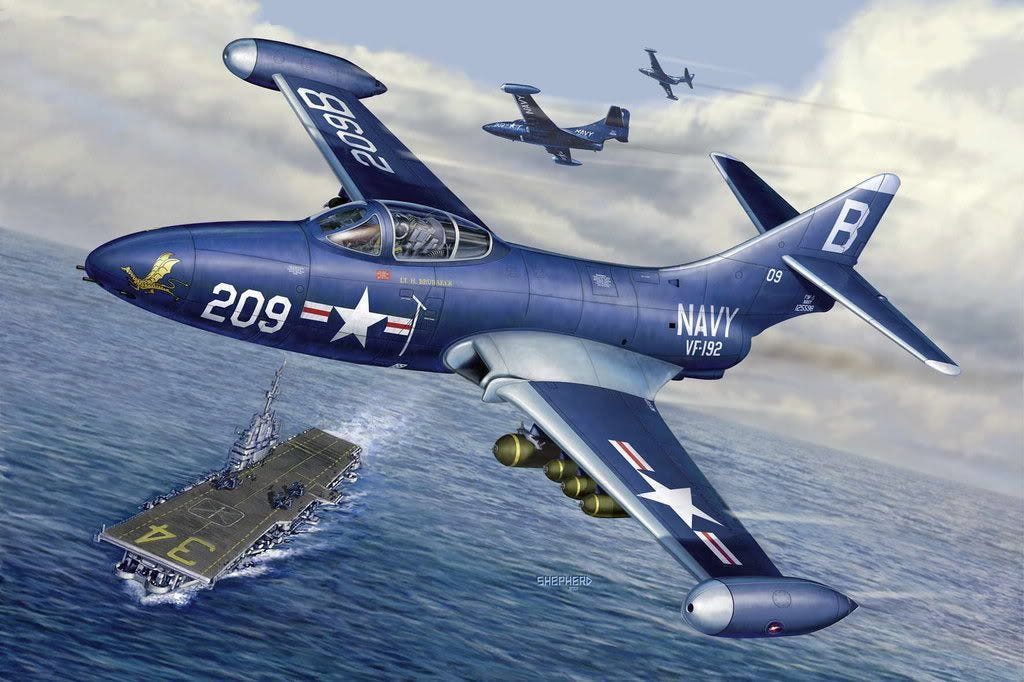
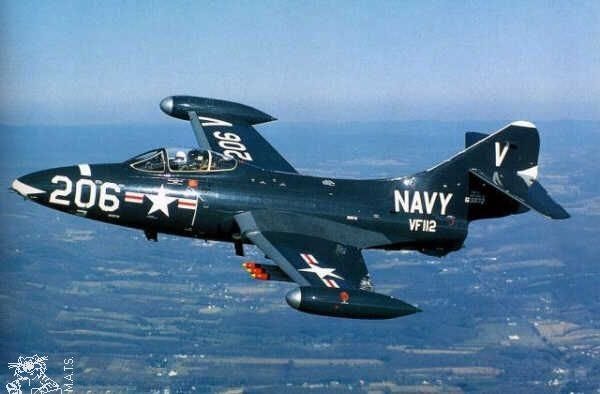
Williams flew a Grumman F9F Panther — sturdy, straight-winged, dependable. Not cutting-edge. Not glamorous. A workhorse. Its job was simple: protect Task Force 77 from anything that might come screaming down out of the north.
He expected North Korean or Chinese aircraft.
He did not expect seven Soviet MiG-15s launched out of Vladivostok.
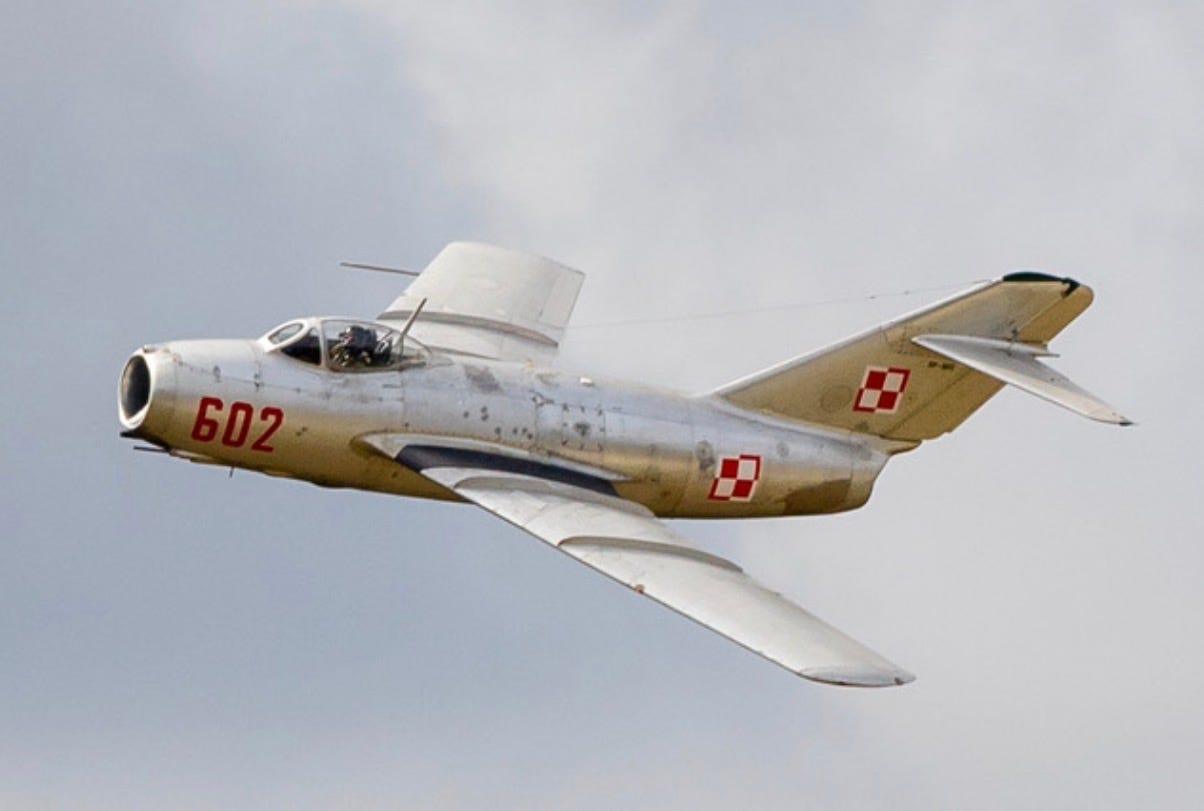
Radar operators saw them first — fast-moving returns, high and aggressive. The MiG-15 was the jewel of the Soviet arsenal: swept wings, heavy cannons, superior climb rate. In 1952, it was the apex predator of jet combat.
Four American Panthers turned to intercept.
Two quickly suffered mechanical problems and peeled away.
Now it was Williams and one wingman facing seven MiGs.
Then the MiGs fired first.
There was no diplomatic ambiguity in cannon fire.
This was no misunderstanding.
This was Americans and Soviets shooting at each other in a war neither government officially admitted they were fighting.
⸻
The Fight
The first pass was chaos.
MiGs slashed downward, cannons flashing. Williams jinked hard, rolled, and pulled inside the lead attacker. The Panther groaned under the strain. He squeezed the trigger. .50-caliber rounds stitched across a silver fuselage. One MiG rolled inverted and went down trailing smoke.
The wingman chased it.
Now Williams was alone.
Six MiGs remained.
Most dogfights in jet combat last minutes. Two or three. Five is considered long.
This one lasted thirty-five.
The MiGs attacked in waves — diving, climbing, re-forming, trying to bracket him. He described later how bursts of fire would go “over me, then under me, then over me again.” He kept turning, kept forcing overshoots, kept pulling the Panther into positions it was never designed to hold.
He dropped a second MiG.
Then a third.
By this point, his Panther was being shredded.
Cannon shells punched through the fuselage. A 37-millimeter round tore a hole the size of a fist through the aircraft’s structure. Hydraulic systems began failing. Instruments flickered. The jet shuddered with each control input.
He considered ejecting.
Below him was the winter sea.
Instead, he stayed.
He maneuvered onto another MiG, fired again, and damaged it so badly that it later went down. Four Soviet fighters destroyed or crippled in one engagement — something no other U.S. pilot has ever done in a single fight.
When the last MiG broke off, the sky went quiet.
Williams’ Panther was not.
Maintenance crews would later count 263 holes in the aircraft.
Two hundred sixty-three.
The fact that both airplane and pilot were still airborne bordered on mechanical defiance.
He limped south toward Oriskany, systems dying one by one, and somehow trapped aboard the carrier. The deck crew stared at the airplane. It looked like it had flown through a metal grinder.
The task force was intact.
The Soviet attackers were gone.
The engagement should have been instant legend.
Instead, it disappeared.
⸻
The Silence
Within hours, intelligence officers moved in.
Gun-camera footage was confiscated.
After-action reports were rewritten.
The explanation was simple, and chilling.
Officially, the Soviet Union was not a combatant in Korea.
Officially, American and Soviet pilots were not dogfighting over the Sea of Japan.
Acknowledging that seven MiGs from a Soviet regiment had attacked a U.S. carrier patrol — and that four had been shot down — risked something far larger than a press release.
Escalation.
The Cold War was balanced on perception as much as force. Washington feared public confirmation would compel Moscow to respond in kind. There was also another concern: U.S. intelligence units had been intercepting Soviet communications. If Moscow realized how thoroughly it was being monitored, that advantage might evaporate overnight.
So the decision was made.
Vice Adm. Robert Briscoe ordered Williams never to speak of it.
Not to his squadron.
Not to his family.
Not even, later, to President Eisenhower when he met him face-to-face.
The Silver Star citation credited him with shooting down one “enemy aircraft” and damaging another.
No mention of four MiGs.
No mention of thirty-five minutes.
No mention of seven-on-one.
History was adjusted.
The fiction was preserved.
And a 27-year-old pilot carried the truth alone.
⸻
The Long Delay
For decades, the story stayed buried.
Williams never broke his word. Not to his brother — also a naval aviator. Not to his wife. Not to friends.
He simply went on serving.
The Cold War ended.
Files declassified slowly.
In the early 2000s, fragments of the truth surfaced. Soviet records confirmed aircraft losses. Intelligence materials began to align with Williams’ account. What had sounded improbable became undeniable.
Veterans and historians pushed for a correction.
In 2023, his award was upgraded to the Navy Cross.
Still, it stopped short.
The Medal of Honor statute of limitations stood in the way.
Legislation was introduced. It stalled. It resurfaced. It died in conference. It returned again.
Finally, in the FY 2026 National Defense Authorization Act, Congress cleared the barrier.
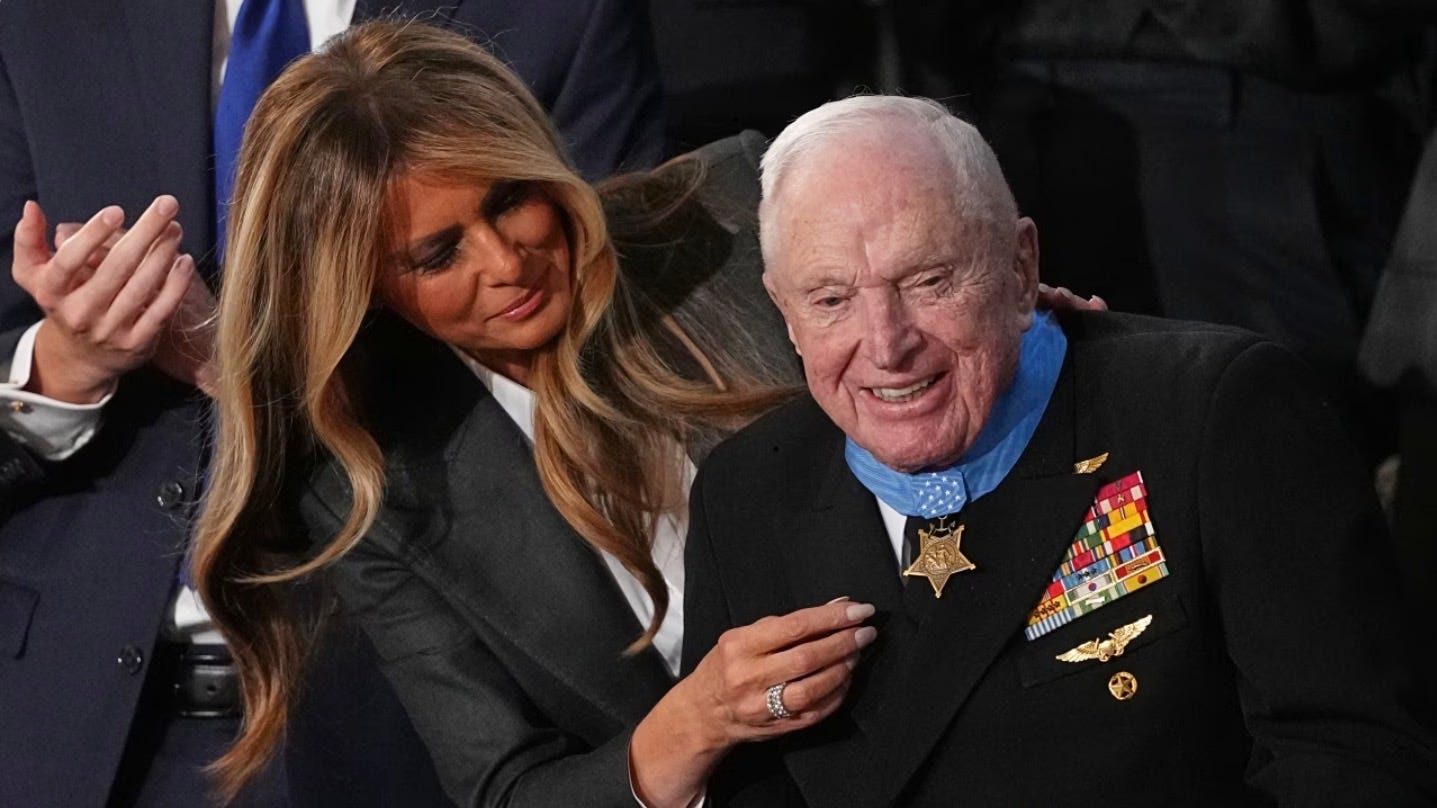
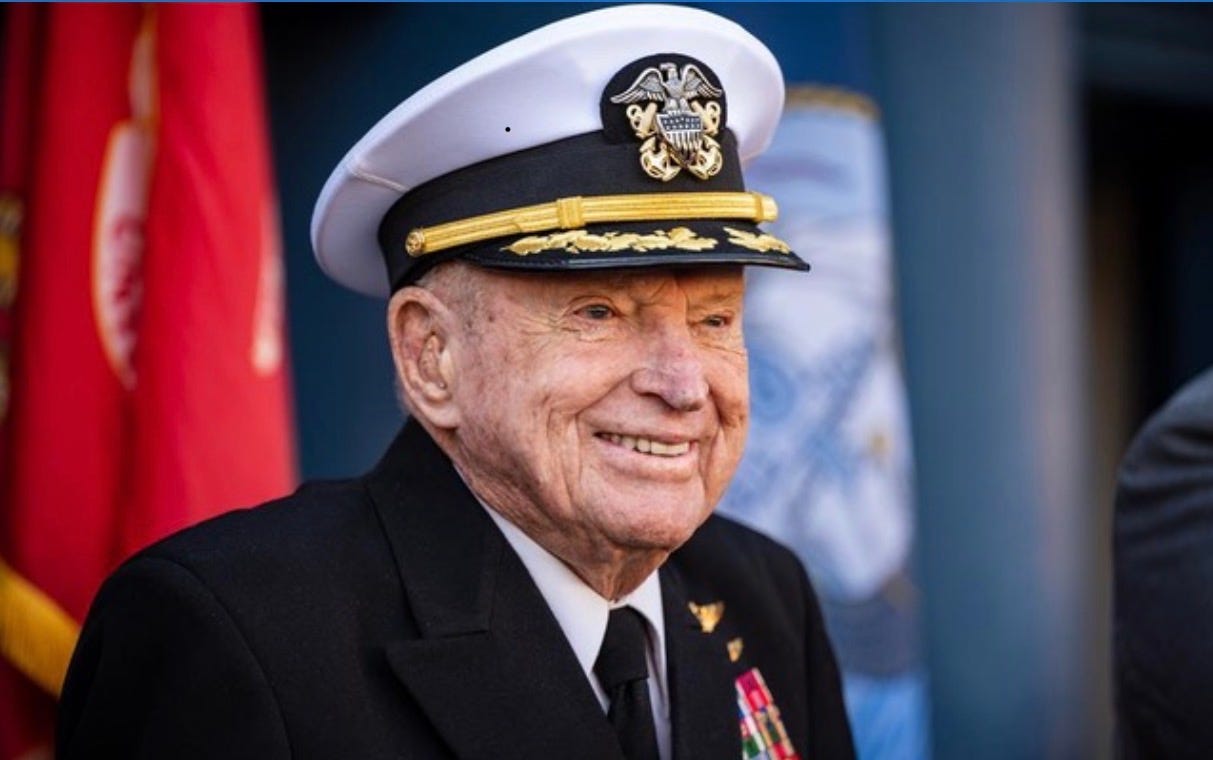
On February 24, 2026, Capt. Royce Williams — age 100 — stood in the House chamber during the State of the Union address.
Frail but steady.
As the citation was read, members rose.
The Medal of Honor was placed around his neck.
Seventy-four years after the dogfight.
⸻
What It Means
Cold War governments made ruthless calculations.
Sometimes they buried victories to prevent larger wars.
Sometimes they asked individuals to absorb the cost of geopolitical balance.
Royce Williams did what we claim to honor: he protected the fleet, accepted impossible odds, finished the fight, and came home.
Then he kept quiet.
For more than half a century.
When the medal finally caught up to him, it did not restore the lost years. It did not bring back the gun-camera film. It did not rewind the decades when the record showed only one enemy plane.
What it did was say the truth out loud.
That on a gray day in 1952, one American pilot fought seven Soviet jets alone for thirty-five minutes and won.
And sometimes the highest form of heroism is not just courage in combat — but obedience in silence.
Hey John: I got this from AI. The MiG-15 did carry a 37 mm cannon, and it was one of the reasons the aircraft was so feared in early jet combat.
Typical MiG-15 armament:
• 1 × N-37 37 mm cannon
• 2 × NR-23 23 mm cannons
Why that mattered:
• The 37 mm round was enormous for an air-to-air weapon. One hit could cripple or destroy a fighter.
• The weapon was designed primarily to shoot down heavy bombers like the B-29, which required high destructive power.
• Against fighters, the shells could tear large holes in the airframe, which matches accounts from Royce Williams’ aircraft damage.
This is a great piece of suppressed history finally brought to light.. So good to see the credit go to the fellow who deserves it....before he checks out... Thank you Jim