


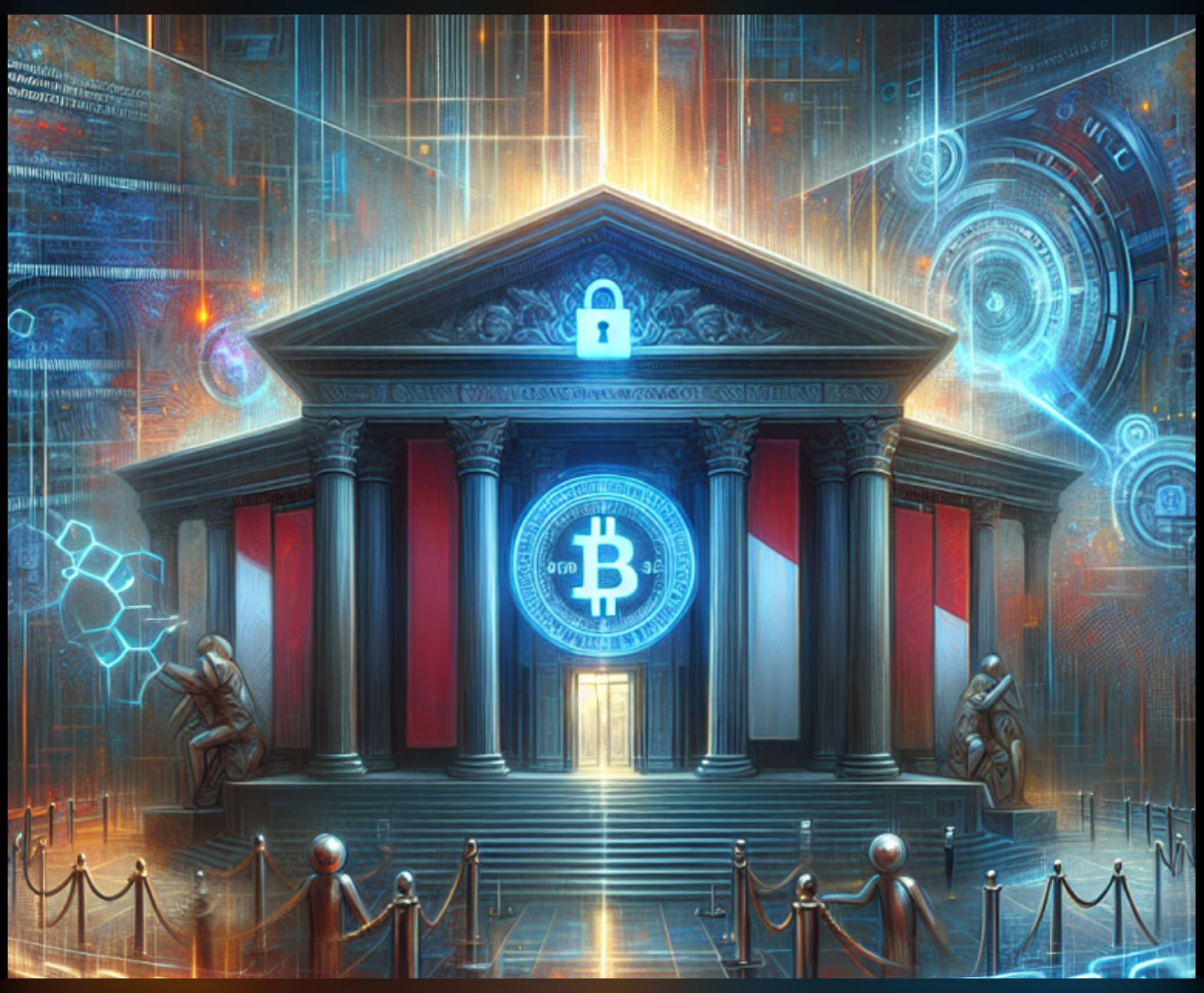
We Explain Bitcoin for Mature Conservative Investors
By Jim Reynolds | www.reynolds.com
Bitcoin is digital property with no counterparty—a scarce asset you can own outright without relying on a bank, government, or financial institution. Think of it as digital gold with perfect portability, perfect divisibility, and a fixed supply that no politician can inflate. It is a savings technology, not a startup or company.
Under the hood, Bitcoin is maintained by thousands of independent computers worldwide that run the same open-source software. These machines—called “nodes”—verify every transaction and enforce the monetary rules: the 21 million cap, the predictable issuance schedule, and the cryptographic signatures proving ownership. New coins are created through “mining,” a competitive process where specialized computers solve mathematical puzzles to secure the network and add new blocks to the public ledger. No company controls Bitcoin, no board of directors can rewrite the rules, and no government can shut it down because the network lives everywhere and belongs to no one. This decentralized development model makes Bitcoin the most secure, tamper-resistant monetary system ever created.
Why Bitcoin Was Developed
Bitcoin emerged in 2008–2009 as a direct response to the financial crisis, bank bailouts, and uncontrolled money printing. It was designed to be an independent monetary system with a fixed supply, global portability, and zero political interference. In short: a check on government and central bank overreach.
Why Conservative Investors Care
Bitcoin behaves like gold but improves on it: it is easily transportable, infinitely divisible, perfectly auditable, and impossible to counterfeit. It functions as digital hard money—an asset that protects wealth rather than relying on institutions that can fail. Mature investors see it as insurance, not speculation.
Market Size
Bitcoin’s market cap is approximately $1.2–$1.4 trillion, with $20–$40 billion traded daily. It is now held by major institutions including BlackRock, Fidelity, and multiple S&P 500 companies. With new Bitcoin ETFs, institutional adoption is accelerating. If Bitcoin ever equals gold’s market cap, it would be a $12 trillion asset.
Risks
Volatility remains high, especially in short time windows. Governments may attempt regulation, but can’t eliminate the network. Custody mistakes can result in loss of coins, though ETFs and reputable custodians mitigate this. Scams exist in the broader “crypto” world, which is why Bitcoin should be treated as distinct and far more conservative. Market cycles follow four-year halving rhythms—patience is essential.
Should You Consider It?
For conservative investors, Bitcoin makes sense as a limited allocation—typically 1–5% of net worth. It is decentralized, transparent, resistant to inflation and censorship, and immune to political manipulation. It is best viewed as a hedge: protection against monetary debasement, sovereign debt instability, and institutional failure. Not a bet—an insurance policy.
Summary
Bitcoin was designed to solve a real problem: the erosion of trust in governments, central banks, and the stability of fiat currencies. Today it serves as a global, rule-based store of value with multi-trillion-dollar liquidity and growing institutional adoption. It will remain volatile, but for mature investors, a small strategic position can provide asymmetric protection in an uncertain financial era.
Bob’s Take
“Look, Bitcoin isn’t magic—it’s math with an attitude. It was built because governments can’t stop spending, banks can’t stop failing, and inflation can’t stop stealing. Bitcoin just says, ‘What if your savings didn’t depend on other people behaving?’ That’s why it swings like a drunk at a wedding: freedom is volatile. But if you want one asset that can’t be printed, frozen, seized, or quietly robbed by inflation, Bitcoin’s the only game in town. Treat it like fire insurance: hope you never need it, keep the policy small, and sleep better knowing it’s there.”